More Than a Kitchen: Modular Spaces for Food Service, Learning and Life Skills
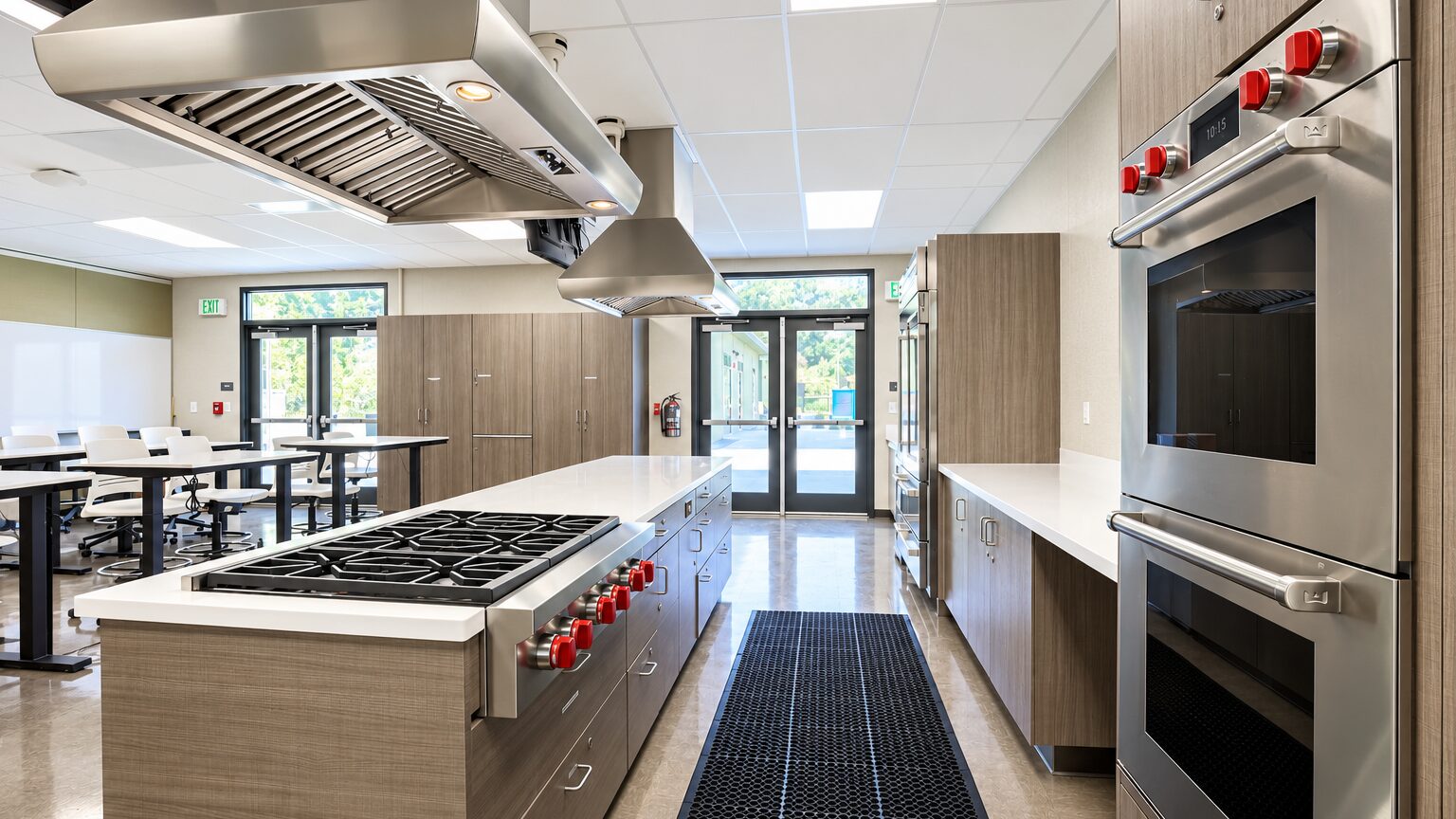
There’s more cooking on today’s school campuses than lunch. From daily food service and culinary arts to hands-on life-skills instruction, kitchens are playing an increasingly diverse role in education.
And just as no two programs are alike, no two kitchens need to be, either.
Modular construction gives schools the flexibility to design kitchens around their programs, campus requirements and the students they serve. From standalone food-service buildings to specialized teaching kitchens, see how six California schools and colleges are putting modular kitchens to work in different ways.
Modular kitchens for school meal service
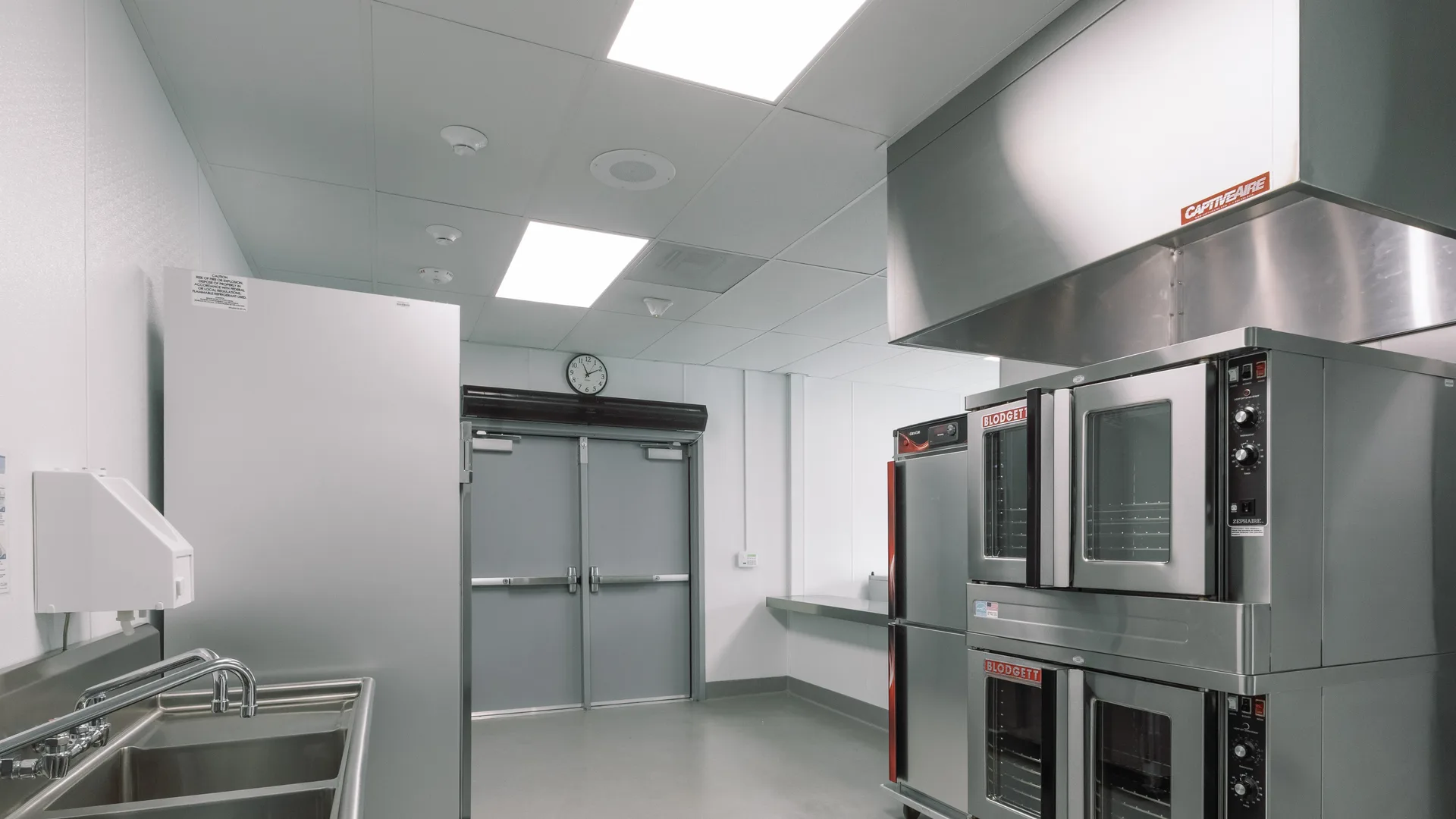
At Lake Forest Elementary School, a dedicated AMS FORM food-service building sits alongside the new GEN7 classrooms and Innovation Lab. The kitchen is adjacent to a student garden, with outdoor dining areas nearby.
Gault Elementary School needed to accommodate several functions on a tight site. Its new two-story AMS FORM building combines six classrooms, a large multipurpose room and a warming kitchen within a compact footprint.
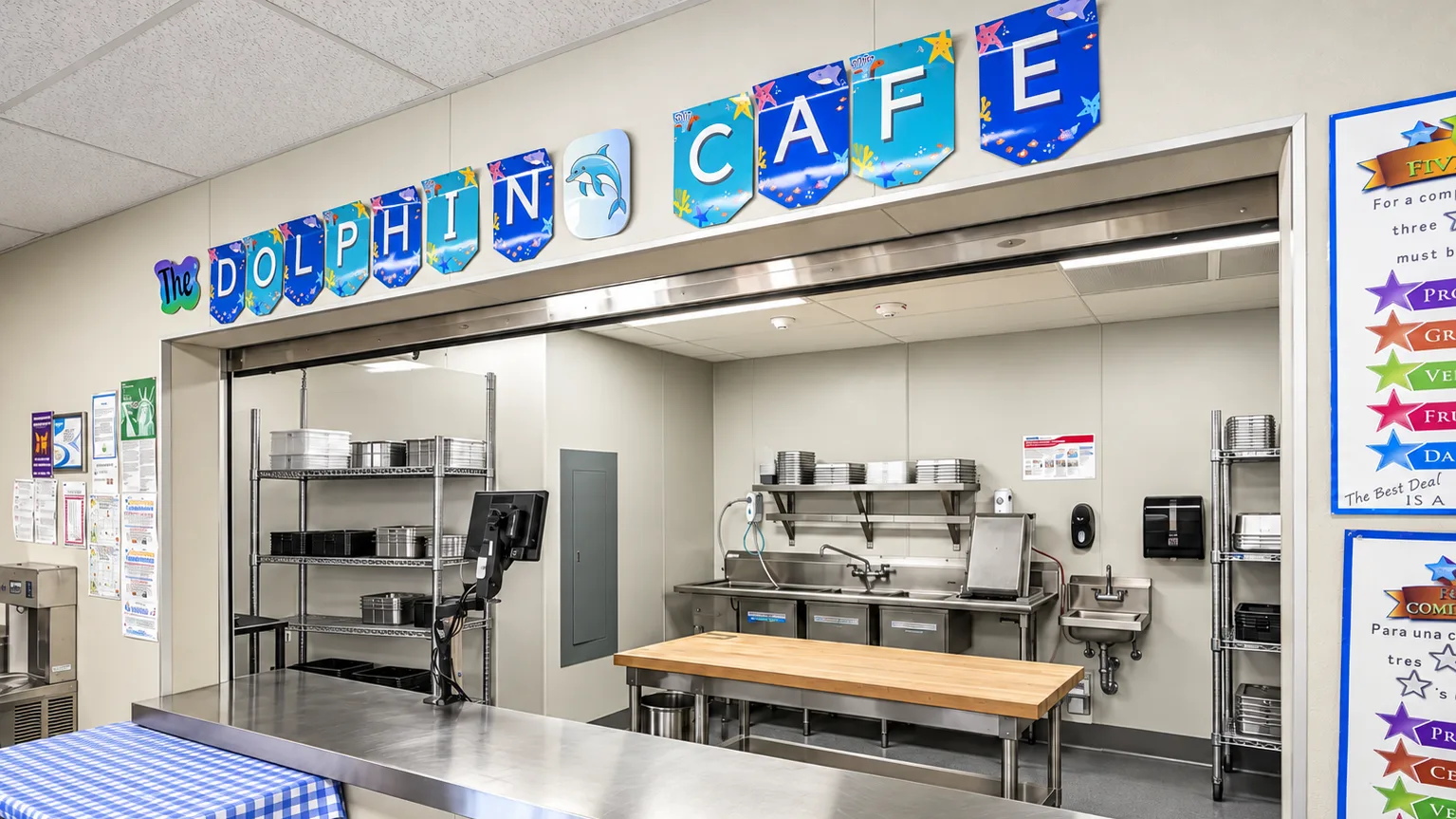
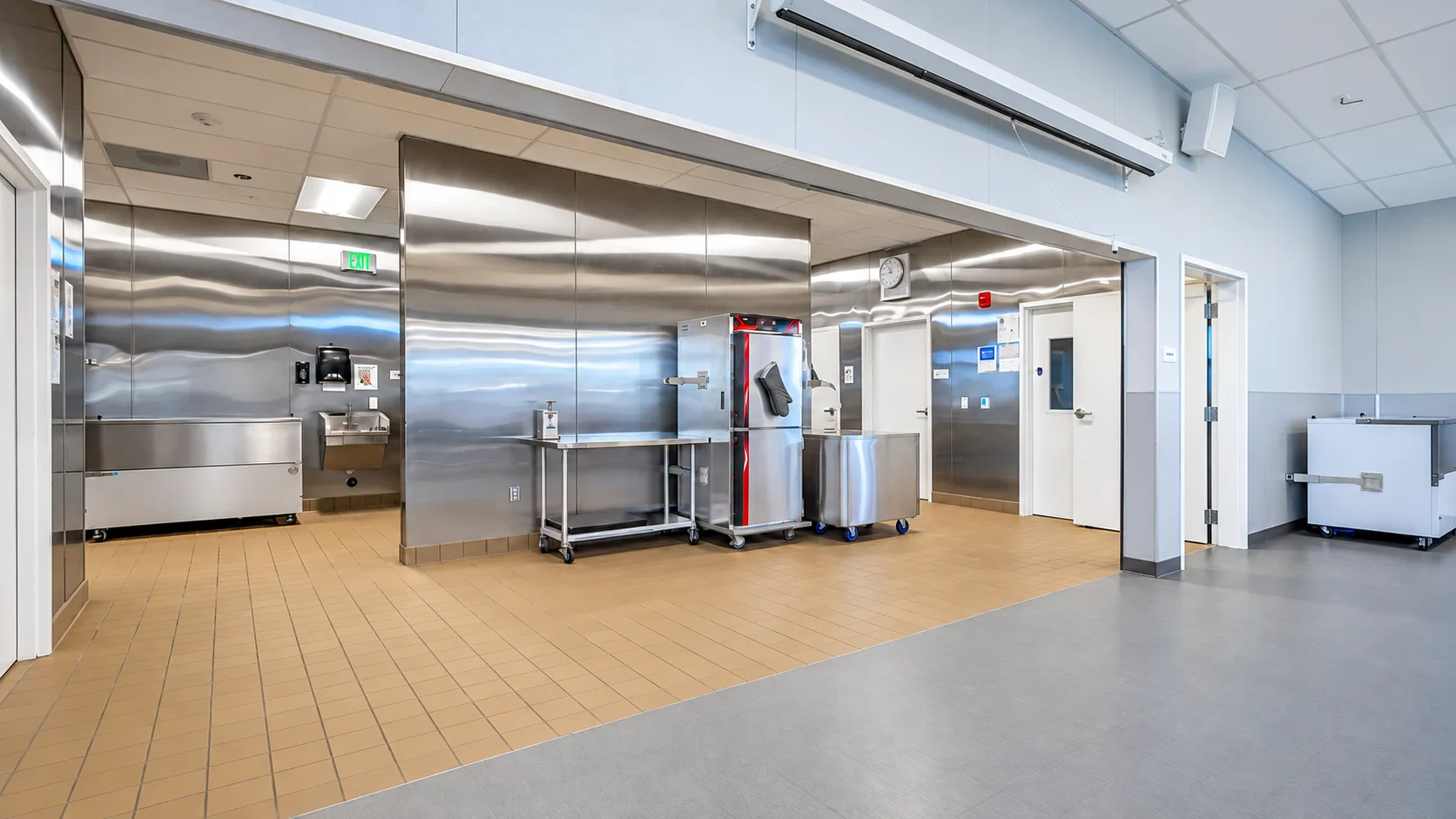
At Los Banos Early Education Center, a wide serving opening connects the kitchen to the adjoining room. The food-service space is part of a new campus dedicated to preschool and transitional kindergarten students.
Culinary arts classrooms and demonstration kitchens
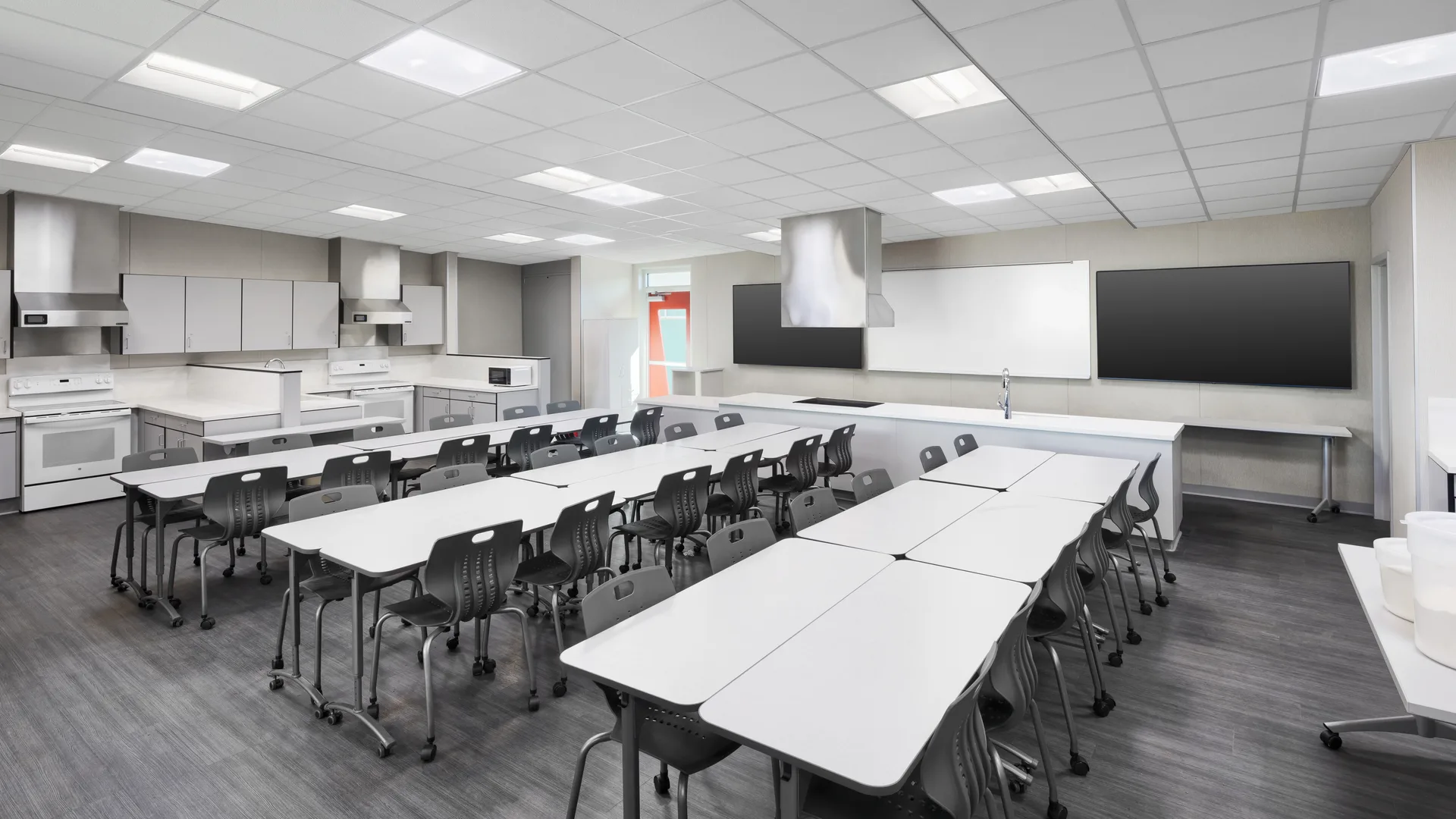
Culinary instruction requires room for demonstrations, student practice and the equipment used in each lesson.
At Isaac L. Sowers Middle School, culinary arts space is included within the new GEN7 buildings delivered as part of a larger campus revitalization. The project also provides classrooms, science labs, art and music spaces.
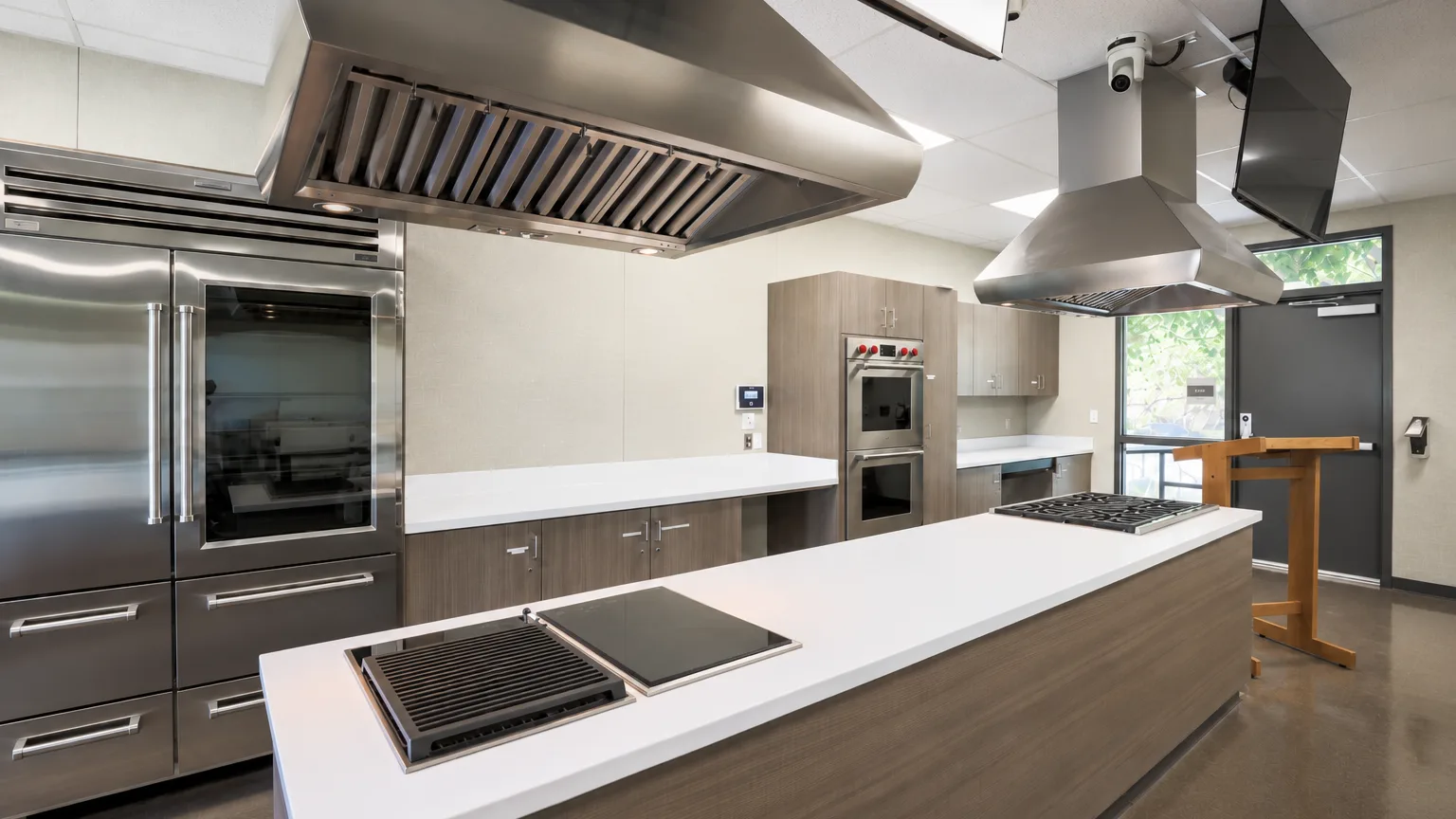
At the College of Marin Organic Farm, growing and cooking food are closely connected. Local chefs lead classes and workshops in a demonstration kitchen using fresh produce and herbs from the farm’s organic garden.
Windows and glass doors bring daylight and garden views into the building. Foldable wall partitions allow spaces to open up or divide for different activities. The kitchen is part of a three-building AMS FORM project supporting sustainable agriculture education and job training.
Teaching kitchens for life-skills instruction
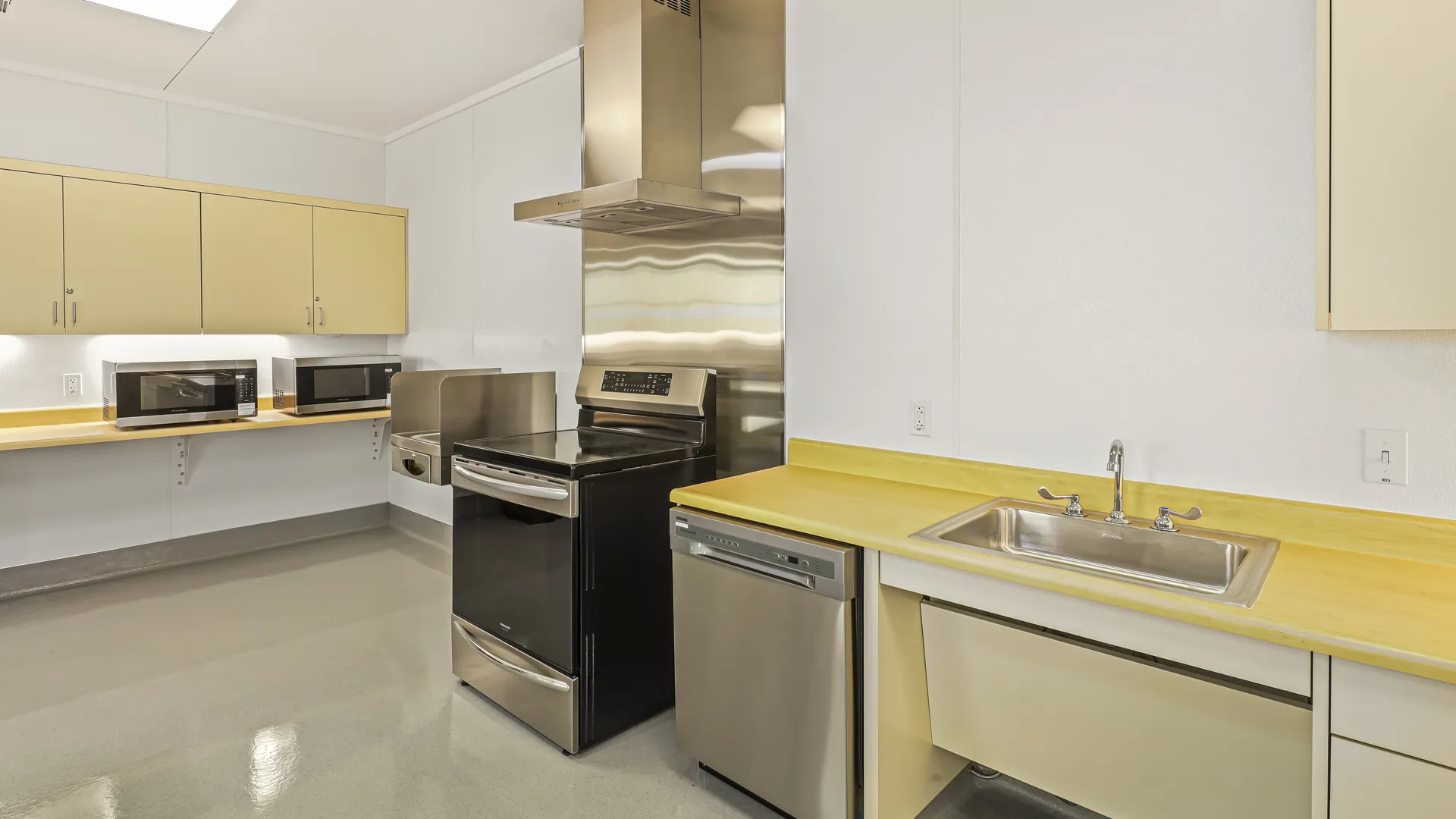
At Arroyo High School, a teaching kitchen helps students in special education develop life skills. It provides a place to practice preparing food and other tasks they can use in daily life.
The kitchen is incorporated into an AMS FORM project with general classrooms, special education suites and restrooms.
Planning a modular kitchen for your school
Start with how the kitchen will be used. Will staff prepare meals on site or warm and serve food prepared elsewhere? Will students work at individual stations, watch demonstrations or practice everyday cooking tasks?
Those decisions help establish the equipment, storage, utilities and space required. A kitchen’s location matters, too. It may need to open to a multipurpose room, serve an outdoor dining area or be incorporated into a classroom suite.
Bringing food-service staff or the teaching team into planning early helps the district, architect and building team understand the daily routine the space needs to support.
AMS has experience delivering kitchens for school meal service, culinary instruction and life-skills learning.
Planning a kitchen for your campus? Connect with us to discuss the program and the space you need.