Top 5 Modular Design Trends of 2026
As needs change and priorities shift, school districts are taking a long-term view, looking to build smarter, future-ready campuses that will serve students for many years to come. School design is evolving, and these five trends are leading the way.
The changes in our world are changing our schools. As schools modernize, campuses are reimagined to reflect shifting needs and create environments where students can thrive and achieve at a higher level.
At AMS, we’ve dedicated 43 years to building safe, healthy schools. Every building is sustainably constructed to ensure the comfort and well-being of students and teachers who use the space. Our buildings prioritize good design—design that is beneficial for the environment and foundational to student success.
This year’s design trends build on that. School districts are now planning with a longer lens, anticipating future needs and thinking through daily operations, considering how a building can adapt and integrate into a school’s campus over time. They’re designing for operational reality, anticipating growth and looking to improve security and performance along with the quality of the learning experience.
5 Trends That Are Reshaping School Design
The 2026 design trends reflect the longer view, elevating modular building design outside, inside and behind the walls. They’re more than trendy; they optimize resources to build with purpose, emphasizing innovation, inclusivity and strong connections, to one another and the world around us.
And they do it all with a sense of style and place. Here are 5 trends that are influencing modular school design this year.
Resilient Buildings
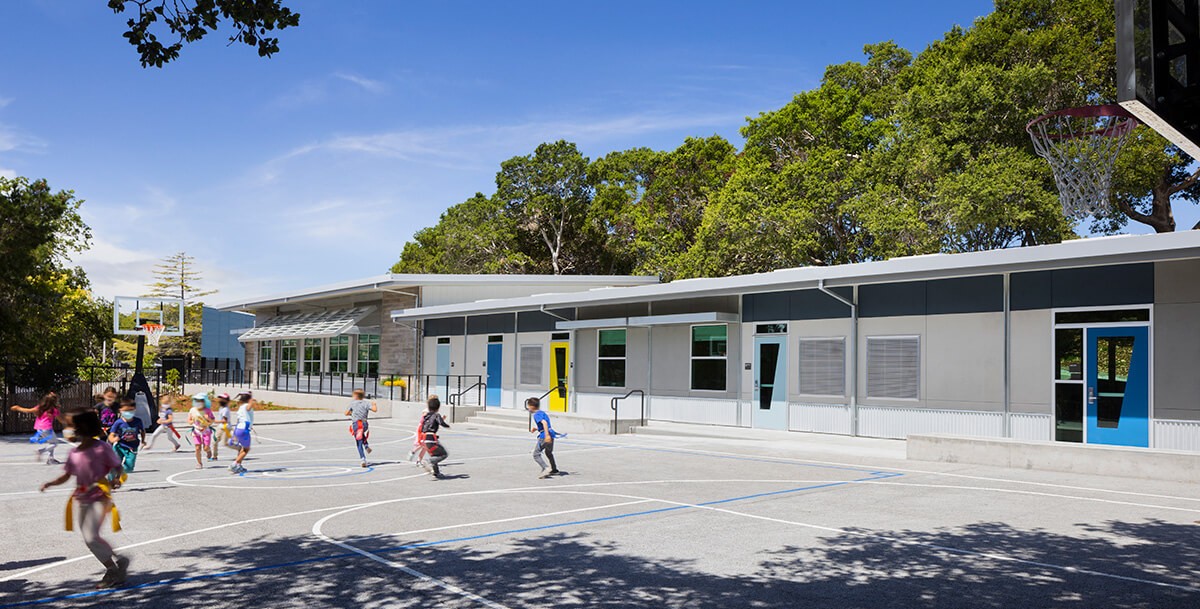
Resilient buildings are intentionally designed for long-term adaptability. They’re future-proof, with the infrastructure to anticipate, absorb and adapt to change.
The top trend in school design is to create adaptive buildings that perform reliably in an unpredictable world. The design supports growth, organically adapting to phased plans, enrollment shifts and evolving programs. It’s resource-efficient, onboarding renewable energy technologies and coordinating electrical, data, mechanical and structural systems to accommodate change without disruption.
Resilient buildings are not only adaptive; they recover more quickly from disruptive events. They’re climate-responsive, with materials and systems thoughtfully selected for ease of maintenance and durable performance in the regional microclimate. They’re designed to withstand extreme weather and temperature fluctuations while maintaining interior comfort and safety in adverse conditions.
Designing Resilient Schools
- Durable, low-maintenance materials
- Steel-and-concrete construction
- Open, clear-span design
- Cool metal roof
- Climate-specific M/E/P
Indoor/Outdoor Learning Space
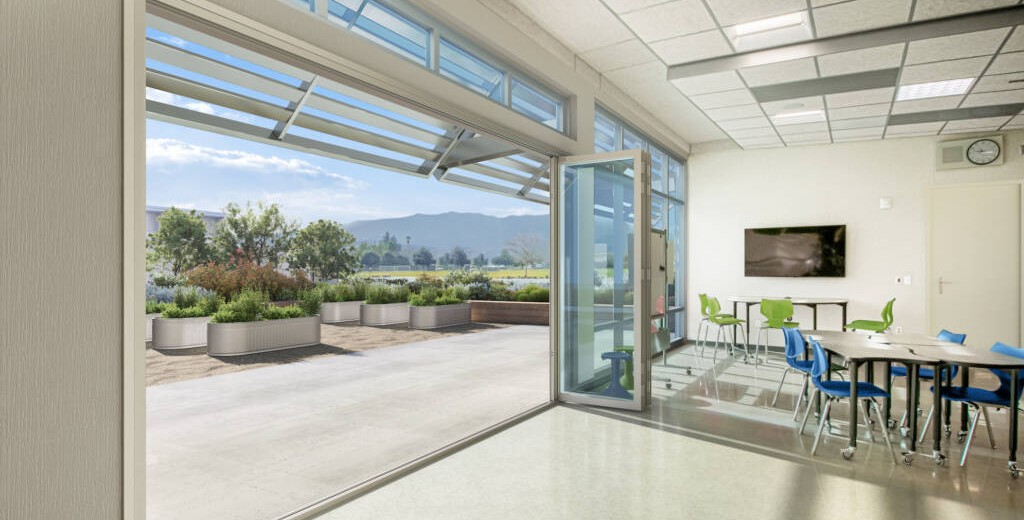
Outdoor learning spaces have become an important part of building design. While existing campuses are rethinking spaces for outdoor learning, new construction builds it into the design.
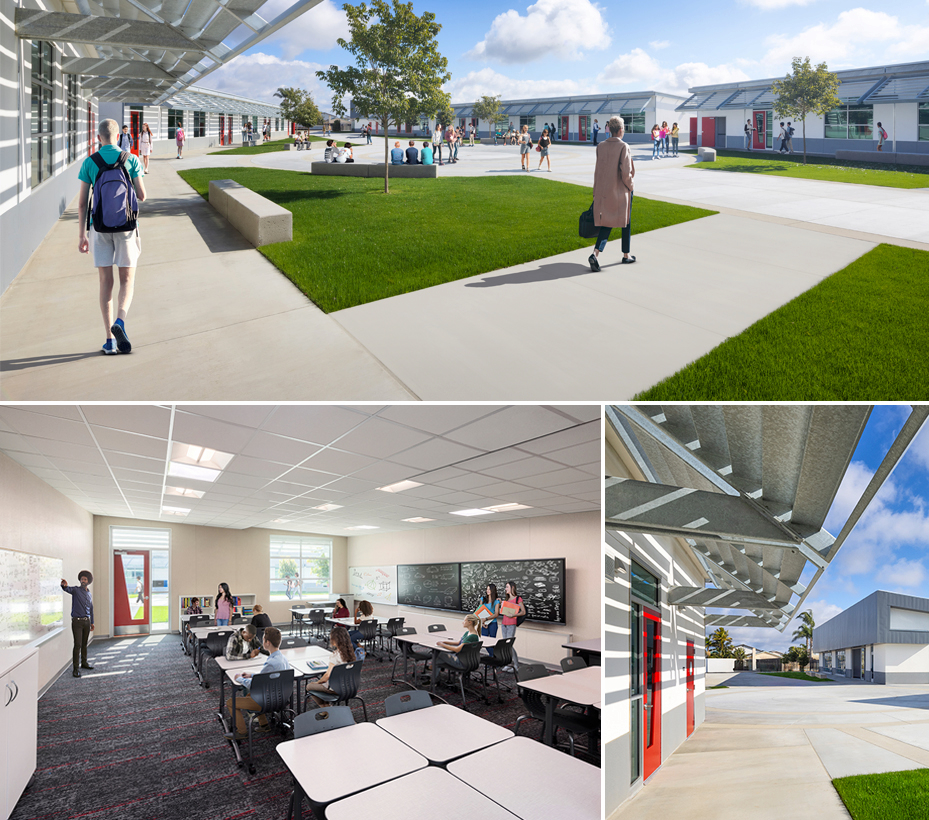
The trend is to create a seamless learning experience with an organic connection between indoor and outdoor areas. Creative configurations, like V- and U-shaped building wings, form perimeter walls, enclosing secure courtyards that expand learning opportunities. Strategically placed windows and doors smooth transitions and fill interiors with healthy sunlight, fresh air and outdoor views.
Technology is integral to seamless connectivity. Upgrading the wireless infrastructure to facilitate outdoor use of digital tools allows students to move freely between learning areas. Modular builders use predictive modeling to optimize placement of access points to ensure consistent coverage. Schools are also tapping into solar, using solar-powered charging stations to keep students connected.
Connecting Indoor/Outdoor Spaces
- Enhanced wireless network infrastructure
- Direct access to outdoor areas
- Secure building configurations
- Large windows oriented for outdoor views
- Doors and operable windows for fresh air
Customized Façades
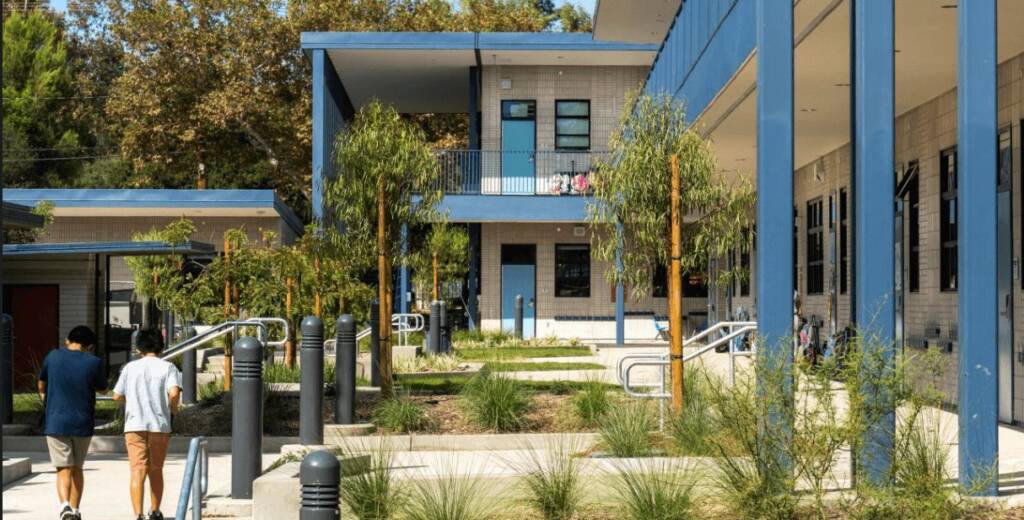
Schools want to cultivate a sense of belonging. And that starts outside with a unique identity that brings students together and makes them feel part of a community.
Customizing a building’s façade is a design trend that uses color, mixed materials and architectural features to creatively express a school’s mission and make it feel warm and inclusive. Integrating school colors into building exteriors, layering texture with tiles and stone, adding decorative accents and replicating patterns across buildings keep a campus cohesive with its own distinctive look and feel.
Creating a front door identity sets a welcoming tone. It assists in wayfinding and supports the campus aesthetic while allowing differentiation of individual spaces. Front door glass invites students into a classroom and controls the amount of natural light brought inside. Glass viewlites and sidelites offer both views and security, giving teachers clear sightlines to supervise outdoor areas.
Creating a Cohesive Aesthetic
- Front door sidelites and transoms
- Architectural pop-outs and insets
- Vertical or horizontal wainscoting
- Woodgrain and decorative tiles
- Aluminum or color panels
Need-Driven Specialty Spaces
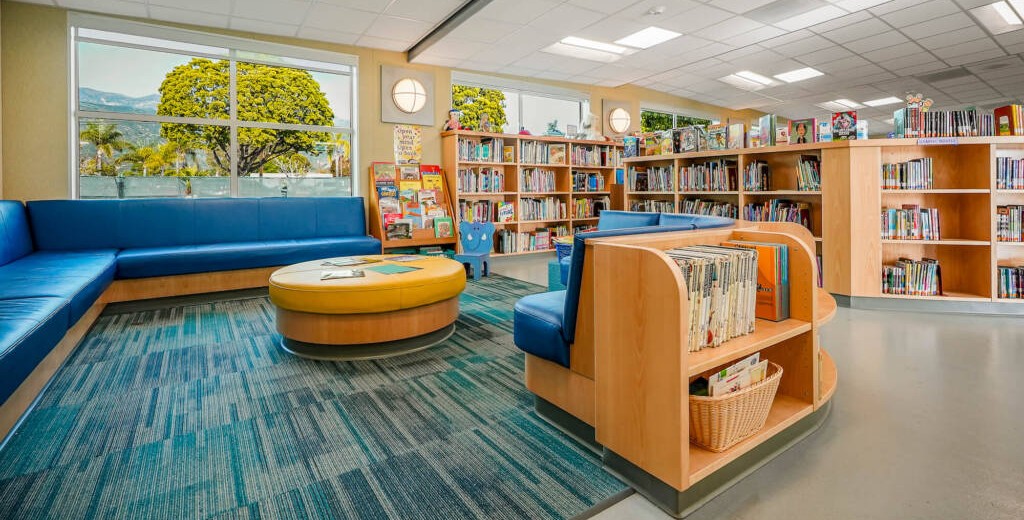
Designing for the learner means centering spaces around student needs— needs that are often highly specialized.
The trend toward purposeful design reimagines space for the unique requirements of special disciplines. Early learning centers provide age-specific space for pre-K students. CTE facilities create real-world environments for career training. High-tech STEM and science labs are equipped for safe hands-on learning, makerspaces inspire creativity and performing art studios support dance, music and theater.
Specialty spaces go beyond academics to meet essential needs. Breakout rooms, common areas and lounges promote mental health, giving students relaxation and time-out space. Multipurpose rooms give schools the flexibility to host a variety of activities in a large, open space. Campuses are also adding libraries, kitchens, fitness space and laundry rooms, as well as storage and office space.
Designing Specialty Spaces
- Healthcare and wellness space
- STEM buildings and science labs
- Early learning centers
- Dance and fitness studios
- Libraries and resource centers
Districts need to modernize quickly and affordably—and this means making the most of funding to deliver the different kinds of facilities students and communities need.
Hybrid design is a creative approach that has become a key consideration in project planning. It’s a site-specific solution that checks all the boxes, strategically blending modular and site-built elements on one site to balance speed, customization and long-term value. Hybrid design continues to trend because it gives districts what they need most: the flexibility to build the space they need on the site they have.
When funds or land are limited, hybrid concepts mix building methods and types to maximize available resources. With hybrid, districts can build up, build out or build onto existing structures. The ability to integrate modular elements into a conventional plan gives districts an opportunity to create a custom mix of space that controls costs and accelerates delivery while meeting programming and space needs.
Creating a Hybrid Plan
- Unified aesthetic between modular and stick-built
- Optimal ratio of modular and conventional
- Seamless integration of single-story and two-story
- Attaching site-built elements to modular buildings
- Adding a modular complex to a traditional campus
Planning for the Future Now
The biggest trend of all is change.
Design is always evolving, and smart designs will continue to anticipate and adapt to change.
Smart design is an investment in students, their well-being and academic success. It’s an investment in community. Modular design helps districts make the most of that investment, offering an affordable path to modernizing campuses to prepare students, schools and communities for a dynamic future.
At AMS, we take great pride in helping schools evolve and grow. We take the uncertainty out of project planning, offering flexible designs and predictable pricing that make it easy to estimate costs and manage budgets. Our all-inclusive pricing mitigates risk, minimizing contingencies and change orders.
Build costs are 30-35% lower than conventional construction, creating savings that can be channeled into design upgrades. And buildings are delivered and ready for occupancy 60% faster.
The greatest savings come from early planning. Involving AMS early in the process gives us time to assess needs and help you evaluate options. Our AMS team can customize plans to achieve your design priorities and value-engineer designs to deliver greater performance at a lower cost.
The time to plan for the future is now. Let us help!