Built Beyond the Standard: How Smart Design Extends the Life of Portable Classrooms
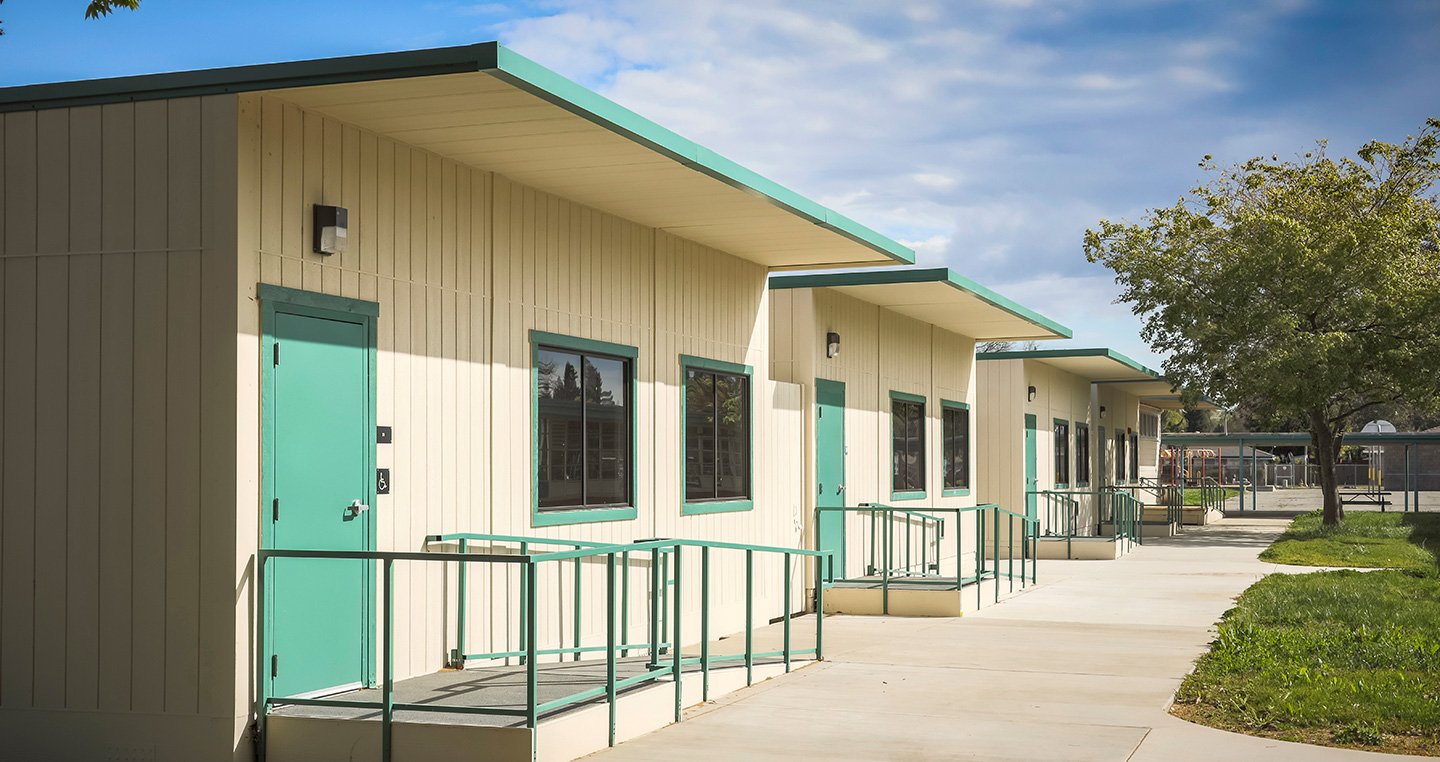
Portable classrooms play a critical role in supporting California’s growing and evolving school districts. When enrollment shifts, new programs launch, or construction timelines stretch, portables often become the immediate solution. While many buildings meet minimum code requirements, not all portable classrooms are built the same.
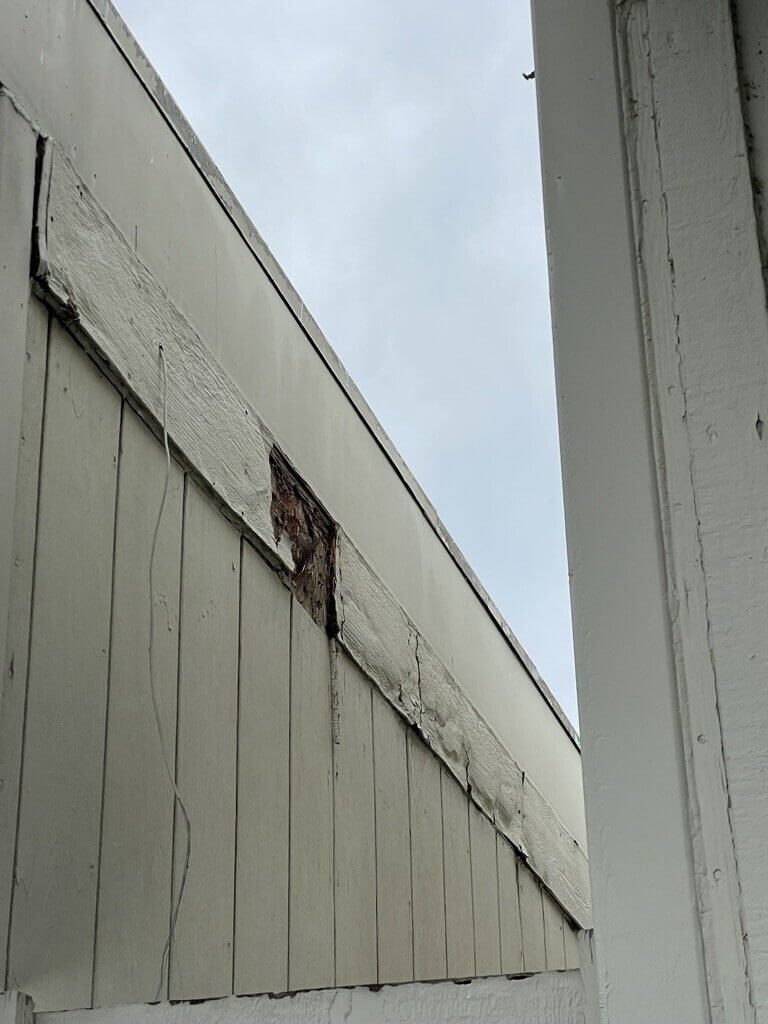
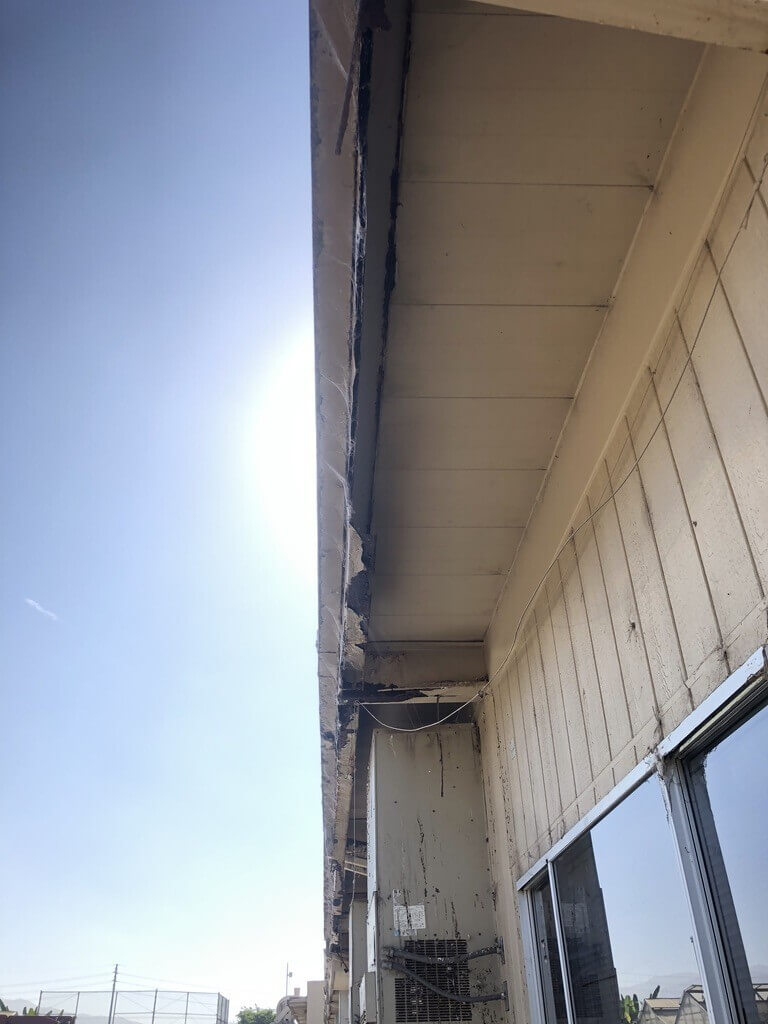
Across the state, aging portables often reveal early signs of deterioration: rusting steel, warped siding, peeling finishes, and inconsistent indoor comfort. What looks like routine wear can signal deeper vulnerabilities that drive up maintenance costs and shorten the building’s service life.
The difference often begins with one factor: the quality of the design and how well the structure is protected from the elements.
The Hidden Cost of Exposed Steel
Many older portables were built with steel framing placed on the exterior of the wall assembly. That exposed steel is continuously subjected to temperature swings, moisture, and air movement. Although the issue may not be immediately visible, it becomes one of the biggest contributors to accelerated deterioration.
When steel is left unprotected:
- Moisture condenses on cold surfaces as indoor and outdoor temperatures shift.
- Condensation leads to rust that spreads behind siding and into structural connections.
- Corrosion weakens the building envelope and can affect air quality.
- Exposed steel acts as a thermal bridge that transfers heat and cold into the classroom and forces HVAC systems to work harder.
Over time, these factors drive up operating costs and reduce the overall lifespan of the building.
Here’s What to Look For
These visible signs may indicate early corrosion or moisture intrusion behind the walls:
- Rust spots or areas of discoloration
- Flaking or cracking around exterior joints
- Persistent peeling paint
- Small holes or pitting in metal surfaces
Identifying these symptoms early can help reduce long-term repairs. The most effective strategy, however, is to start with a building designed to avoid the problem altogether.
Designed for Today’s Needs and Tomorrow’s Value
Every portable classroom in California must meet DSA and Title 24 requirements. That is the baseline. Meeting minimum standards, however, does not guarantee the long-term performance schools expect.
AMS 2GO classrooms are built beyond the standard. Districts get fast delivery without sacrificing durability, comfort, or long-term value.
Key 2GO design features include:
- Steel assemblies fully enclosed and protected within the wall system
- Thermally efficient insulated walls that reduce heat transfer and improve indoor comfort
- Durable exterior and interior materials that withstand daily use and changing weather
These features are part of every 2GO building. They are not optional upgrades.
Design That Reduces Maintenance
All buildings require maintenance, but thoughtful design significantly reduces how often that work is needed. AMS buildings maintain their performance over longer intervals, helping districts better manage both budget and staff resources.
Recommended best practices for portable classroom maintenance:
- Reseal exterior joints annually to protect against moisture
- Clear gutters and downspouts regularly
- Replace HVAC filters and clean vents to support air quality and system efficiency
- Touch up paint and protective coatings as needed
- Address small issues early before they become larger repairs
With a stronger building envelope and durable materials, maintenance becomes predictable rather than reactive.
Replacement or Long-Term Investment
When older portables approach the end of their service life, districts often face a decision. Replace them with another short-term classroom or invest in a building designed for longer-lasting value.
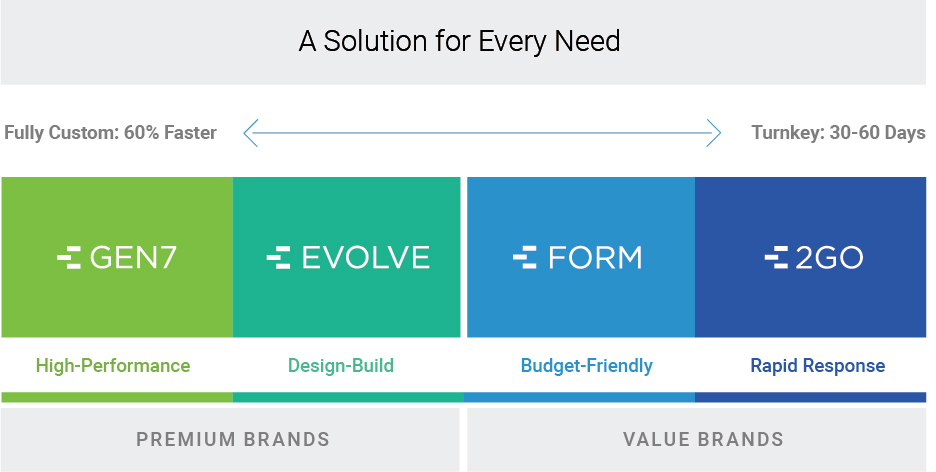
- AMS 2GO classrooms offer immediate space with higher construction quality than typical portables.
- AMS modular buildings provide a permanent, high-performance solution with a 40-year lifespan and reduced maintenance cycles.
The right choice depends on district timing and goals. The shared principle is simple. A stronger foundation today results in lower lifecycle costs and better learning environments in the future.
Sustainability Through Longevity
Durability is both a financial and environmental benefit. When a portable classroom needs to be replaced early, it increases landfill waste and the carbon footprint of reconstruction.
AMS 2GO and AMS modular buildings are engineered for longer service life, which helps districts:
- Reduce waste from premature replacements
- Lower energy use through thermally efficient systems
- Limit material consumption over time
Longer-lasting buildings support sustainability goals without adding complexity to the project.
The AMS Difference
AMS buildings consistently outperform typical portables in lifespan, energy performance, maintenance needs, and total cost of ownership.
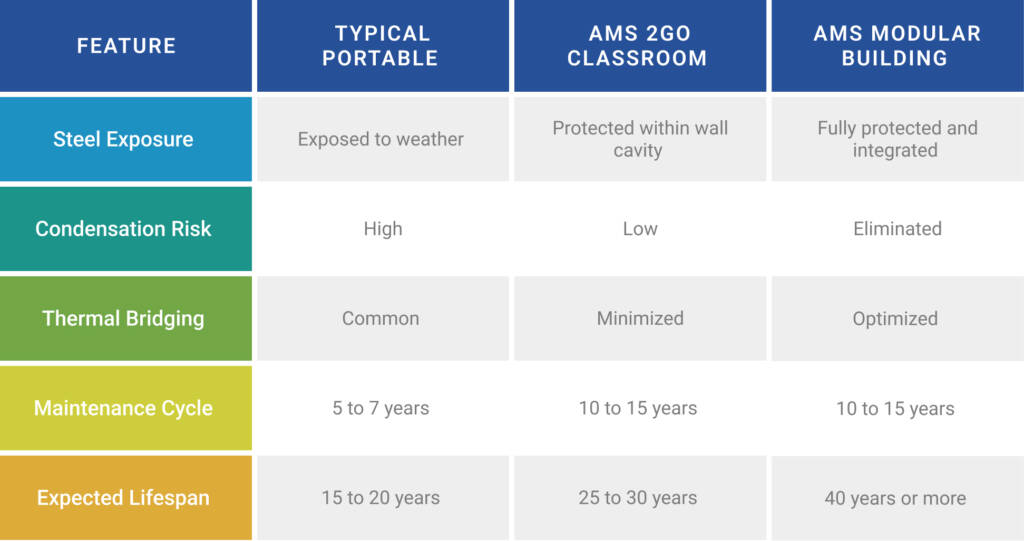
Across every category that affects cost, comfort, and operational performance, AMS buildings deliver stronger long-term value.
In the Field: Real Results
AMS 2GO buildings are already supporting California districts in real, high-pressure scenarios.
Sol Aureus College Preparatory used a 2GO building to expand its K-8 program over a single summer. The new classroom matched the look of existing buildings and gave students a flexible, well-ventilated space ready for Day 1.
After wildfires destroyed the Reibli Extended Child Care Center, AMS delivered four 2GO buildings that replaced the lost facilities. The layout included TK classrooms, multipurpose spaces and a commercial-grade kitchen. The buildings were durable, efficient and operational within months.
Building for the Future
Portable classrooms should not feel temporary. When designed well, they support academic programs, enrollment growth, modernization efforts, and district flexibility.
From quick-delivery 2GO classrooms to long-term modular campuses, every AMS building is engineered for durability, comfort, and lasting value. These classrooms continue to perform year after year, creating healthy learning environments that support both students and educators.
When districts choose AMS, they are not simply maintaining classrooms. They are investing in facilities that are built for the future.
See how much you can save — Request a Quote.