Pre-Check vs. Pre-Engineered: What’s Right for Your Modular School Project?
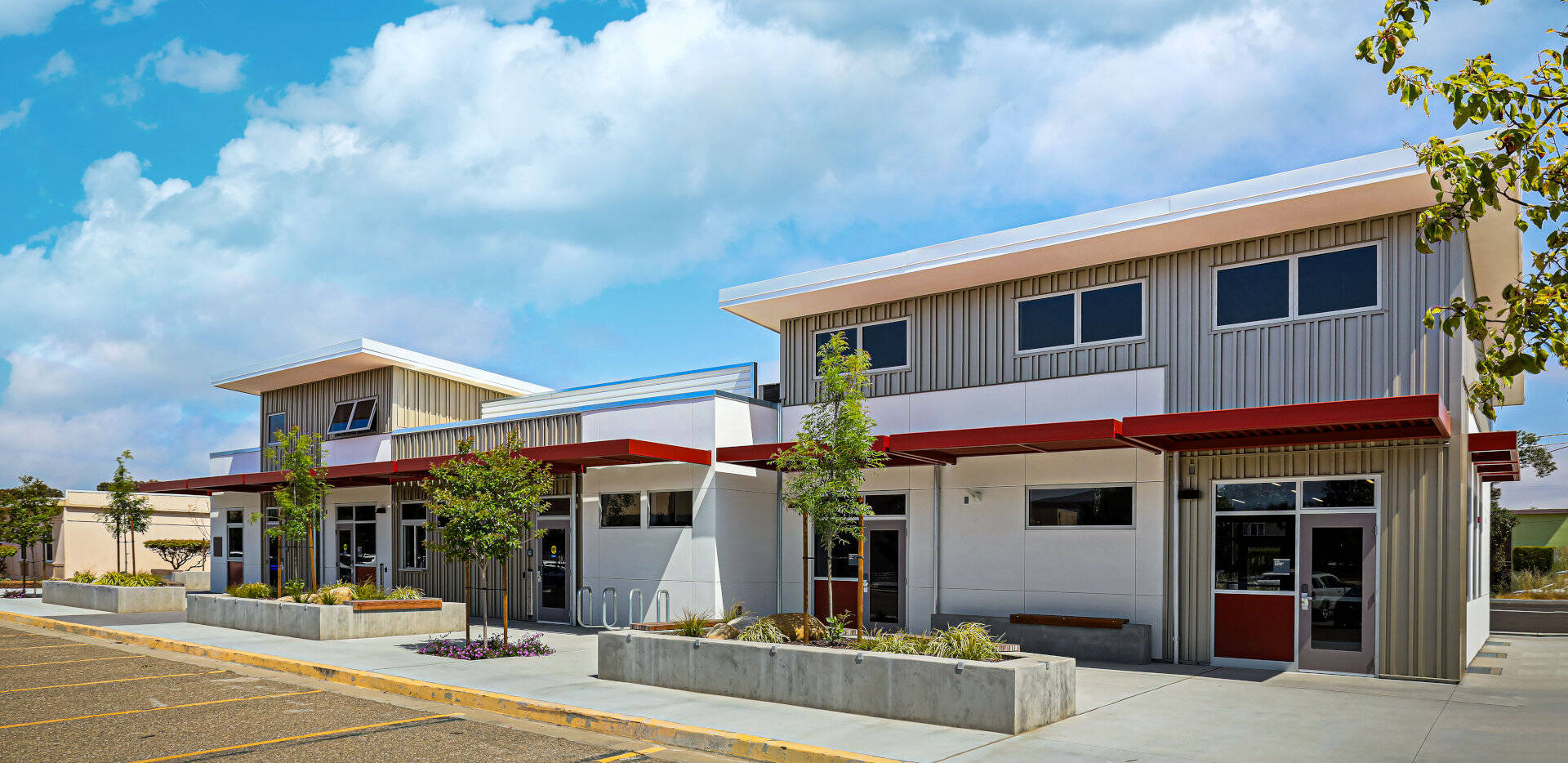
Once a district decides modular is the right delivery method, another important decision follows: should the project begin with a DSA Pre-Check (PC) design or a Pre-Engineered (PE) solution?
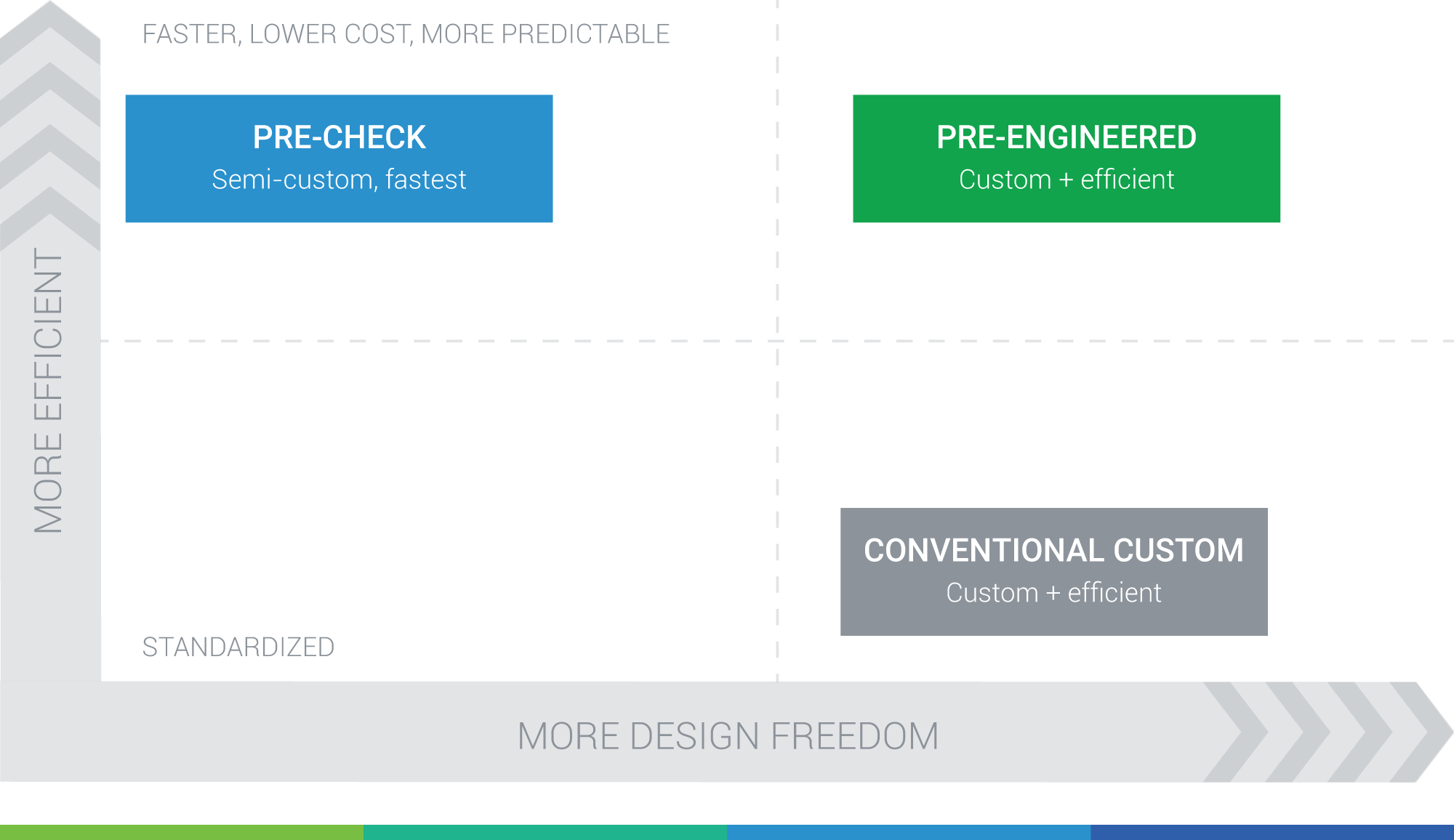
It’s tempting to think of these as tiers, with one serving as the entry-level option and the other as the upgrade. In reality, they’re simply different approaches to achieving different project goals. Pre-Check and Pre-Engineering are two points on a customization spectrum, each suited to a different kind of project. The question worth asking is how much design freedom your project actually needs, and what you’re willing to trade to get it.
One point often gets lost. Both Pre-Check and Pre-Engineered are built on AMS’s proven modular framework, so even a fully customized Pre-Engineered building keeps the efficiency advantages of an accelerated schedule, factory quality control, and predictable cost. Traditional site-built construction can’t match those. The real difference, then, is less about PC versus PE and more about choosing either one over a custom build using conventional delivery methods. The two paths differ in what you start from and how much you can change.
What Is a DSA Pre-Check (PC) Design?
A Pre-Check design is a modular school building that has already been reviewed and approved by California’s Division of the State Architect (DSA). American Modular Systems maintains the largest library of DSA Pre-Check–approved modular designs in California, an extensive catalog of one- and two-story classroom and support buildings that have already cleared the structural and code review that slows most school construction projects.
When your district selects a Pre-Check design, the starting point is a proven, code-compliant building that you personalize from there. Floor plans, finishes, features, and building systems are all configurable. What you skip is the longest and riskiest stretch of the DSA approval process, since the heavy structural plan check is already done. A Pre-Check design can often qualify for an over-the-counter (OTC) DSA review, typically a one-day turnaround, instead of a full plan review that can add months to a project’s schedule.
Many districts are surprised by how much flexibility exists within a DSA Pre-Check design. Exterior finishes, architectural details, interior layouts, learning environments, and building systems can all be customized while still benefiting from the efficiencies of an approved framework.
This is what makes the Pre-Check path semi-custom: you get real design choices, made within a proven, DSA-approved framework that protects your schedule.
PRE-Check is the right fit when your project involves:
- Standard or repeatable classroom programming
- Capacity additions or campus modernization
- A tight, predictable construction schedule
- Maximum cost certainty
- The lowest possible approval risk
AMS GEN7, FORM, and 2GO all work from this DSA Pre-Check library, which is what makes them fast to market and budget-predictable for districts with planned, proven needs.
What Is a Pre-Engineered (PE) Building?
A Pre-Engineered building goes beyond Pre-Check parameters. Instead of selecting from the approved library, AMS collaborates with your district and your architect to design a one-of-a-kind building tailored to your exact program, aesthetic, and vision.
The detail that changes the comparison is this: Pre-Engineering still builds off the Pre-Check framework. It uses the same modular engineering, factory process, and construction systems that make modular fast and reliable, so you’re customizing on top of a validated foundation rather than engineering a building from scratch.
The finished building is visibly and structurally indistinguishable from site-built construction, and it’s delivered roughly 60% faster. You get full design freedom while keeping modular’s speed and cost advantages, which is the combination stick-built construction can’t offer. This makes the Pre-Engineered path fully custom, but built on a proven framework.
Pre-Engineered is the right fit when your project calls for:
- A signature architectural identity
- Complex or atypical programming
- An architect-led design vision
- A building that expresses community character
- Custom design without conventional timelines
AMS offers two solutions for projects that require a Pre-Engineered approach. EVOLVE delivers premium, fully custom buildings with no design limitations. GEN7-C extends GEN7’s sustainable, high-performance platform into a fully custom, pre-engineered design. Both push beyond DSA Pre-Check parameters while keeping modular’s speed, quality control, and cost advantages.
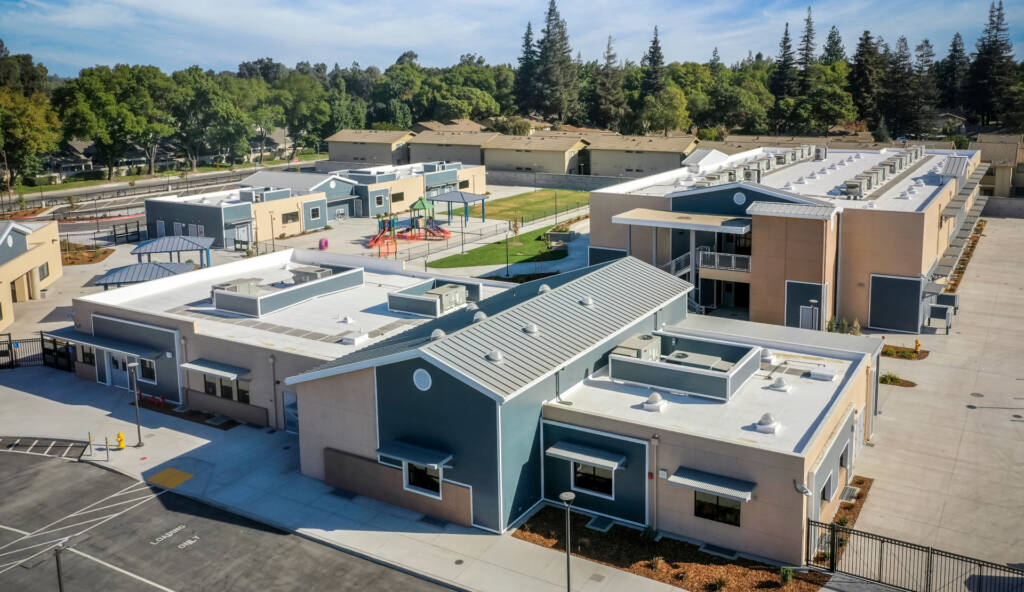
The EVOLVE product let us set our own design parameters and use a hybrid of modular and conventional construction to achieve a fully custom, high-end look where modular and stick-built are indistinguishable.
AYA TANISHI
Partner | Architect
TETER Architects + Engineers (Flora Arca Mata Elementary)
Pre-Check vs. Pre-Engineered vs. Conventional
Most “PC vs. PE” comparisons stop at the two modular options, but the decision only makes sense with a third column added: a fully custom build using traditional, site-built methods. That’s the real alternative to Pre-Engineering, and it loses to PE on nearly every dimension a school district cares about. Here’s how they compare:
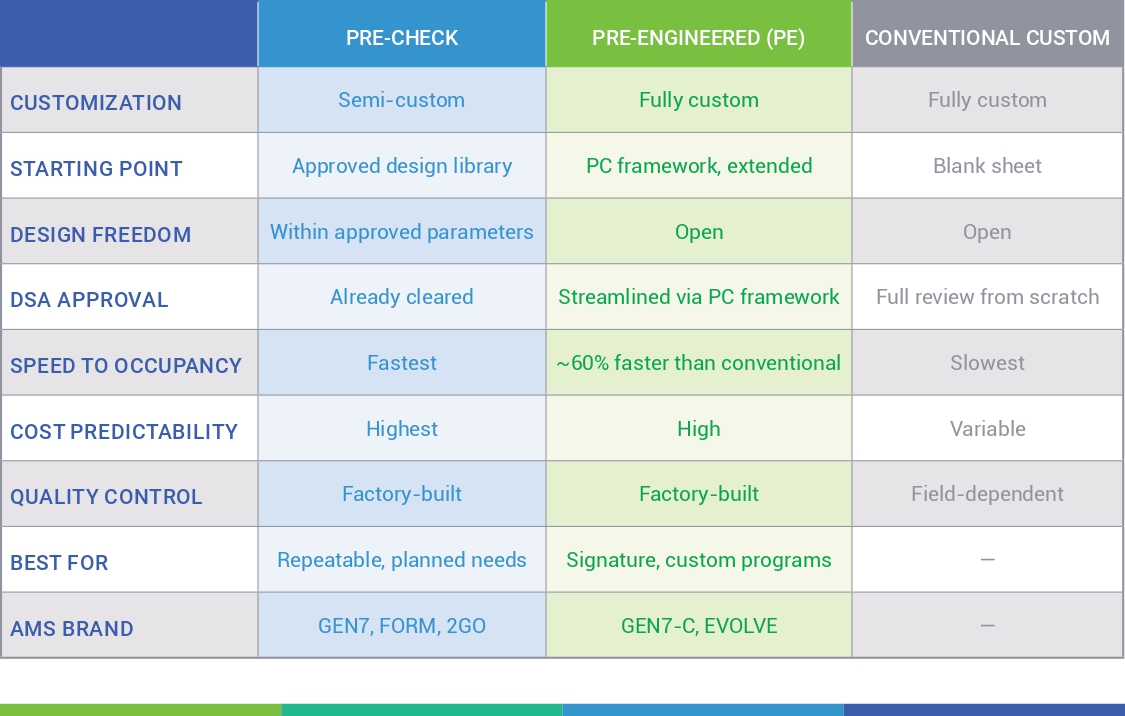
Reading across the table, Pre-Check and Pre-Engineered differ mainly in design freedom, while sharing modular’s advantages in speed, cost certainty, and factory quality. Conventional custom construction matches Pre-Engineering on design freedom but loses on nearly everything else. The efficiency you gain by staying modular doesn’t disappear when you customize; it carries through to PE.
How to Choose: A Quick Decision Framework
A few questions usually settle it:
- Is your design largely repeatable, or genuinely one-of-a-kind? Repeatable programming points to Pre-Check. A singular vision points to Pre-Engineering.
- How much schedule risk can you absorb? Pre-Check compresses the approval timeline the most. Pre-Engineering still beats traditional construction handily.
- Are you collaborating with an architect on a custom design? That’s Pre-Engineering territory.
- What matters more, maximum cost certainty or maximum design latitude? Pre-Check leans toward certainty; Pre-Engineering delivers latitude without the conventional penalty.
- Does the building need to express a specific identity or community character? If yes, lean toward Pre-Engineering.
There’s no universally better path, only the one that fits your project’s design intent. Force a custom vision into a Pre-Check design and you compromise what you set out to build. Pay for fully custom delivery when a Pre-Check design would have served you well, and you’ve spent schedule and budget you didn’t need to. The aim is to protect what your district actually programmed and designed for.
The Bottom Line
Pre-Check and Pre-Engineering both rest on the same proven modular framework, one that delivers your building faster and with fewer surprises than conventional delivery methods. Pre-Check gives you a head start from an approved library. Pre-Engineering builds your specific vision on that same validated foundation. Both keep you on the efficient side of the line.
In the end, the right path is the one that matches the project in front of you.
How AMS Brands Align to Each Path
Every district’s project lands somewhere on the customization spectrum, and AMS offers solutions to match.
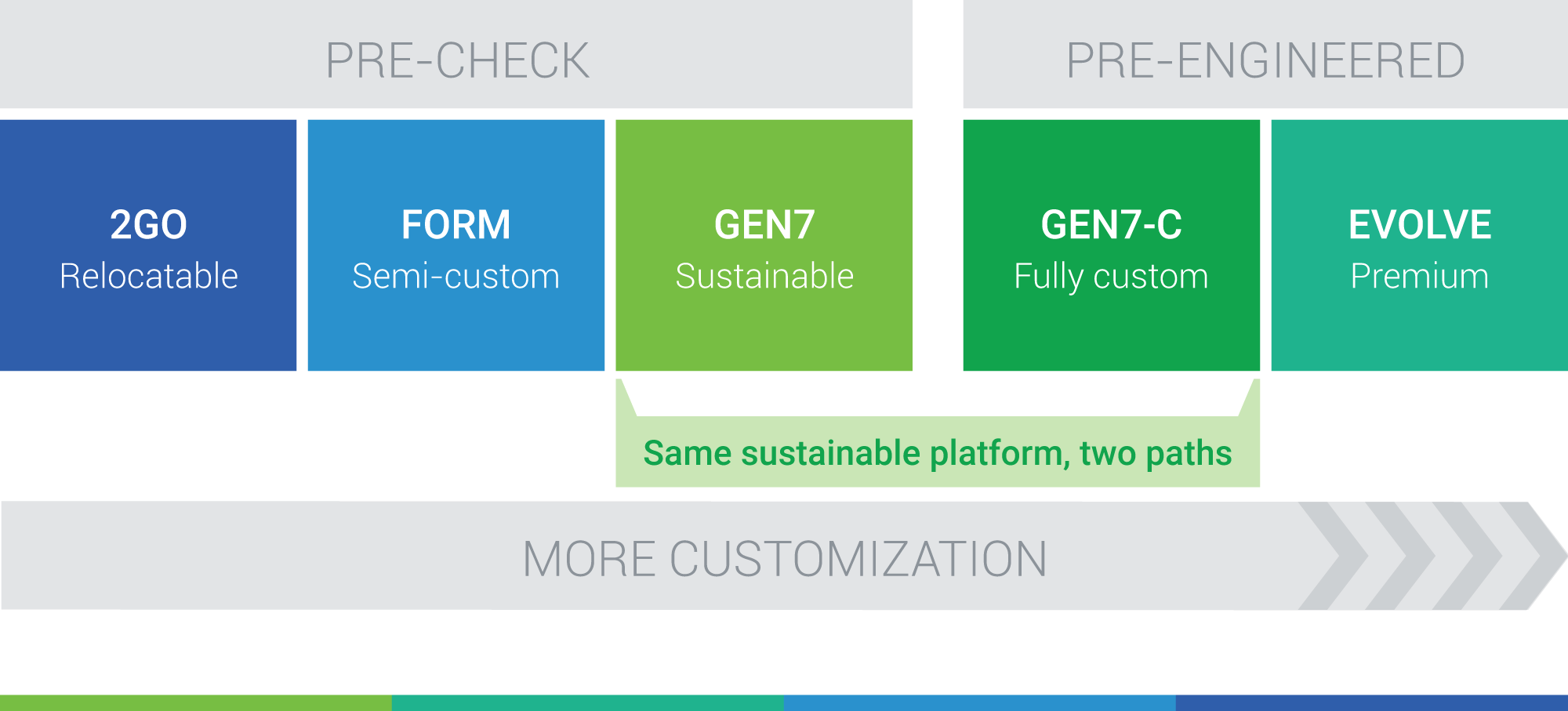
On the Pre-Check side, 2GO supports relocatable and short-term needs, FORM delivers value-focused permanent buildings, and GEN7 provides high-performance, sustainable learning environments. All three leverage AMS’s library of DSA Pre-Check–approved designs to accelerate delivery and provide greater cost certainty.
For projects that require a Pre-Engineered approach, AMS offers two solutions. EVOLVE delivers fully custom buildings with virtually unlimited design flexibility, while GEN7-C extends the GEN7 platform into a fully custom, pre-engineered solution that combines sustainability, performance, and architectural freedom.
The important distinction is that moving toward customization doesn’t mean leaving modular behind. Whether a project starts with a DSA Pre-Check design or a fully custom concept, it’s still built on the same proven modular framework, benefiting from factory quality control, accelerated schedules, and predictable outcomes.
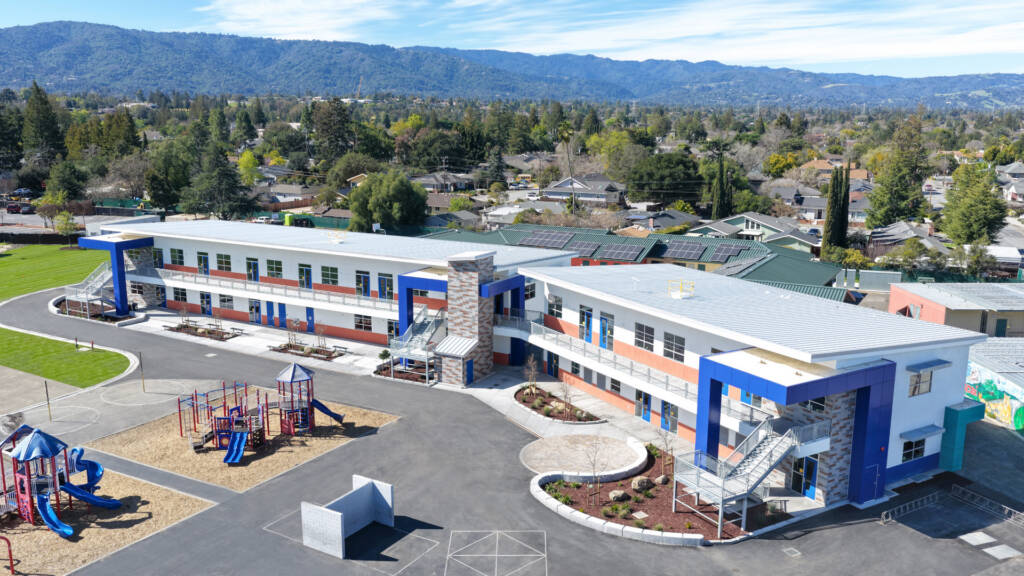
GEN7 is unique in that it spans both sides of the spectrum. Districts can leverage a DSA Pre-Check-approved GEN7 design or pursue a fully custom GEN7-C solution while maintaining the same commitment to sustainability and high-performance building design. Capri Elementary in Campbell Union School District is one example of GEN7-C in action.
Not sure which path fits your project? Let’s talk.
FREQUENTLY ASKED QUESTIONS
Made Clear